Who ships heat-sensitive goods
Chocolate makers and confectioners sending seasonal orders to retailers. Candy and snack brands with coated or filled products. Cosmetics companies shipping lipstick, balms and creams. Candle makers, whose product slumps and sweats oil in a hot trailer. Wine, craft beverage and supplement brands. None of this freight needs to be cold. It needs to stay out of the heat.
Cool-room temperatures for chocolate and candy
Chocolate keeps best at 55 to 65°F in dry air. It starts to soften in the mid 70s and loses its shape in the 80s. Colder is not better: chocolate pulled from a cold truck into humid air collects condensation. The ranges below are general guidance. Give us the temperature on your product spec.
| Product | Typical range | Main risk |
|---|---|---|
| Chocolate bars and bonbons | 55–65°F | Melting and bloom |
| Gummies, caramels and coated candy | 55–70°F | Sticking and deforming |
| Lipstick, balms and creams | 60–75°F | Softening and separation |
| Candles and wax goods | Below 75°F | Slumping and oil sweat |
| Wine and craft beverages | 50–60°F | Cooked flavor and pushed corks |
Bloom on chocolate and other heat damage
Bloom is the gray or white film on chocolate that has been through a temperature swing. Fat bloom forms when chocolate warms enough for cocoa butter to rise to the surface and set again. Sugar bloom forms when moisture condenses on cold chocolate and dissolves sugar. The product is still safe to eat, but a retailer will not put it on the shelf.
What goes wrong in a hot dry van
- A closed trailer in summer sun gets far hotter inside than the air outside.
- Shared freight waits on unrefrigerated docks between trailers.
- Gel packs and insulated liners last a limited time, and a delay can outlast them.
- Melted product sets again in a new shape and sticks to its wrapper.
- Shared reefer trailers are usually set for chilled food, which is colder than chocolate wants.
How a small refrigerated truck handles summer shipping
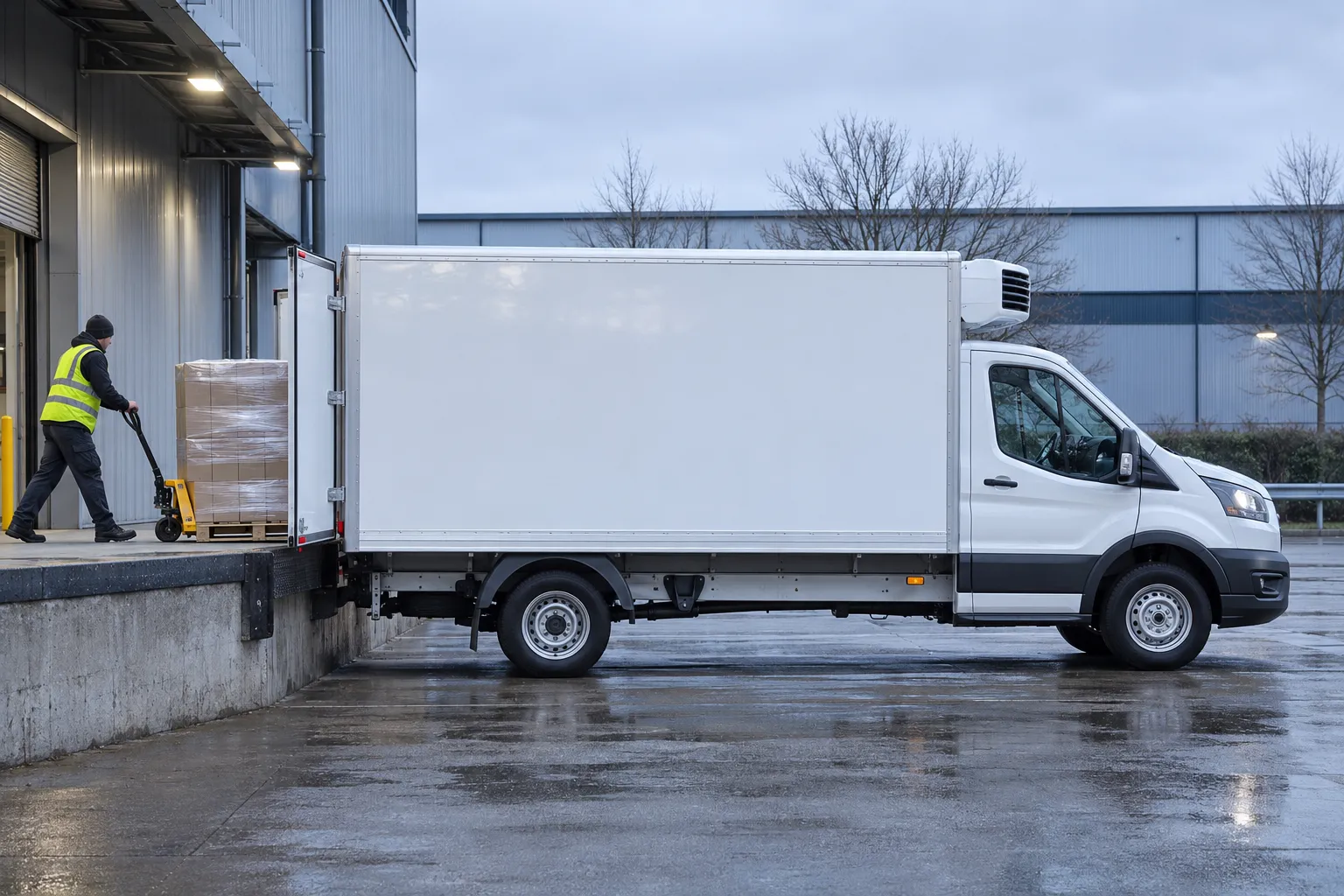
A refrigerated van or box truck holds any setpoint from −20°F up to ambient, so it can sit at 60°F as easily as at freezing. The unit keeps the box there through hot states and midday sun. Your pallets are the only freight on board and the truck makes no terminal stops, so the load stays in cooled air from your dock to the receiver’s.
Refrigerated vanRefrigerated LTL alternativeRefrigerated shipping cost
What to send for a quote
- Product type and how it is packed
- The temperature range on your spec sheet
- Pallet count and total weight
- Pickup and delivery ZIP codes
- Ready date and the receiver’s delivery window
Call or text David at (619) 839-9809 with those details, or use the quote form.
Common questions
What temperature should chocolate be shipped at?
Chocolate ships best at 55 to 65°F with low humidity. Warmer than that risks softening and bloom. Much colder risks condensation when the cartons come off the truck. This is general guidance, so give us the range your product needs.
Does chocolate need a refrigerated truck in summer?
Yes, for most lanes in warm months. A closed dry van in the sun can get hot enough inside to melt chocolate. A refrigerated truck set to a cool-room temperature holds the box at that setting for the whole trip.
What is chocolate bloom and what causes it?
Bloom is a dull white or gray film on the surface of chocolate. Fat bloom comes from chocolate warming and cooling again. Sugar bloom comes from condensation. Both are caused by temperature swings in storage or transit, and both make product hard to sell.
Can you ship cosmetics or candles temperature controlled?
Yes. Lipstick, balms, creams and candles soften or separate in a hot trailer, and they ship well at a cool-room setpoint. Tell us the range on your product spec and the truck is set to it for the trip.
Is a refrigerated truck too cold for chocolate?
No. A refrigerated truck holds whatever setpoint it is given, and ours range from −20°F up to ambient. For chocolate that is usually 55 to 65°F, or the figure you specify, which is well above normal chilled-food settings.